Thomas Sankara: The Revolutionary Who Tried to Reinvent a Nation
Jun 19
4 min read
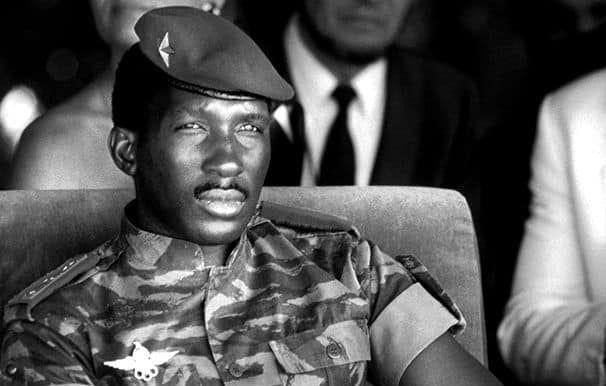
Imagine a president who sold off the government's fleet of luxury Mercedes and replaced them with the cheapest cars available. A leader who banned officials from flying first class. A revolutionary who argued that freedom could not be imported from foreign powers. This was Thomas Sankara, the charismatic leader often called "Africa's Che Guevara." For just four years, he attempted something extraordinary: to transform one of the world's poorest countries into a self-reliant, independent nation free from corruption, dependency, and colonial influence. His vision inspired millions, threatened powerful interests, and ultimately cost him his life. This is the story of Thomas Sankara—his rise, his ideology, his revolution, and the betrayal that brought it to an end.
From Army Officer to Revolutionary
Thomas Sankara was born on December 21, 1949, in Upper Volta, a former French colony in West Africa that would later become Burkina Faso. Raised in a modest Catholic family, Sankara initially considered becoming a priest. Instead, he chose a military career and trained as an army officer. Yet he was far from a conventional soldier. Sankara was deeply intellectual and politically engaged. He immersed himself in the writings of Karl Marx, Vladimir Lenin, and Frantz Fanon, while drawing inspiration from revolutionary leaders across Africa and Latin America. Through his studies, he became convinced that political independence alone was not enough. Although colonial powers had formally withdrawn from Africa, he believed their economic and political influence remained firmly in place. For Sankara, true freedom meant more than sovereignty—it meant economic independence and national self-determination.
The Philosophy Behind the Revolution
Sankara's worldview combined Marxism, Pan-Africanism, anti-imperialism, self-reliance, and social justice. At the center of his philosophy was a rejection of dependency on foreign aid. He famously argued, "He who feeds you, controls you." To Sankara, aid often came with hidden costs. Loans carried conditions, and charity could create political dependence. In his view, this was simply colonialism in a different form. Instead, he urged African nations to produce locally, consume locally, and rely on their own resources. He criticized both Western powers and African elites whom he believed served foreign interests rather than their own people. His message was simple but radical: Africa would never achieve genuine independence if it remained economically dependent on others.
The Birth of Burkina Faso
In 1983, at just 33 years old, Thomas Sankara came to power through a military-backed revolution.
One of his first acts was highly symbolic but deeply meaningful. He renamed the country.
The name "Upper Volta" reflected its colonial past. Sankara believed a new nation required a new identity, so he renamed it Burkina Faso, meaning "The Land of Upright People" or "The Land of Incorruptible People." The change was more than a rebranding exercise. It represented a declaration of dignity, pride, and independence. Citizens were no longer subjects of a former colony—they were participants in a revolutionary national project.
Reforming One of the World's Poorest Countries
Once in power, Sankara moved quickly. His government launched mass vaccination campaigns that protected millions of children against diseases such as measles, yellow fever, and meningitis. Education and literacy programs expanded, while investments in healthcare improved public services across the country. Agricultural reform became another priority. Land was redistributed from traditional landlords to peasant farmers, increasing food production and reducing reliance on imported goods. At the same time, Sankara promoted major infrastructure projects, including roads, railways, and housing developments. What made these initiatives distinctive was his commitment to self-sufficiency. Rather than depending heavily on foreign assistance, he wanted Burkinabè citizens to build their future with their own labor and resources.
A Revolutionary Commitment to Women's Rights
Perhaps one of Sankara's most remarkable achievements was his commitment to women's liberation.
In the 1980s, advocating gender equality was uncommon among African leaders, particularly in countries facing severe economic challenges. Yet Sankara viewed women's rights as essential to national development. He encouraged women to join the workforce, participate in politics, and hold positions within government. He also campaigned against practices that limited women's opportunities and social standing. As he famously declared, "The revolution and women's liberation go together." For Sankara, social progress could not be separated from political and economic transformation. A successful revolution required the participation of the entire population.
The Enemies of the Revolution
But revolutionary change rarely comes without resistance. Sankara's policies disrupted established power structures throughout Burkina Faso. Traditional elites opposed land redistribution. Government officials resented the loss of privileges and luxury. Business interests feared economic reforms that threatened their influence. Beyond Burkina Faso, foreign governments viewed Sankara with suspicion. His outspoken criticism of imperialism and his refusal to align closely with Western interests made many uncomfortable, particularly France, the country's former colonial ruler.
Yet the greatest danger came from within his own movement.
The Betrayal
Among Sankara's closest allies was Blaise Compaoré, a fellow military officer and longtime friend.
The two men had risen through the ranks together and shared many revolutionary ideals. However, over time, political disagreements and personal ambitions created tensions between them.
On October 15, 1987, those tensions erupted. During a coup led by Compaoré, Thomas Sankara was assassinated alongside twelve of his associates. He was just 37 years old. His body was quickly buried, and for years many questions surrounding his death remained unanswered. Compaoré seized power and would go on to rule Burkina Faso for the next 27 years. The revolution was over.
A Legacy That Refuses to Die
Sankara's assassination ended one of Africa's most ambitious political experiments.
Many of his reforms were reversed, and Burkina Faso gradually moved closer to the international economic systems he had sought to challenge. Yet his ideas proved far more durable than his presidency. Across Africa and beyond, Thomas Sankara became a symbol of integrity, anti-corruption, and resistance to neocolonialism. His speeches continue to inspire activists, students, and political leaders who see in him a rare example of a leader who lived according to his principles.
Unlike many politicians, Sankara left office with almost no personal wealth. He owned little, lived modestly, and imposed on himself the same sacrifices he demanded from others.
More than three decades after his death, his reputation has only grown. Thomas Sankara governed for just four years. Yet in those four years, he created a legacy that many leaders fail to build in a lifetime.

Comments