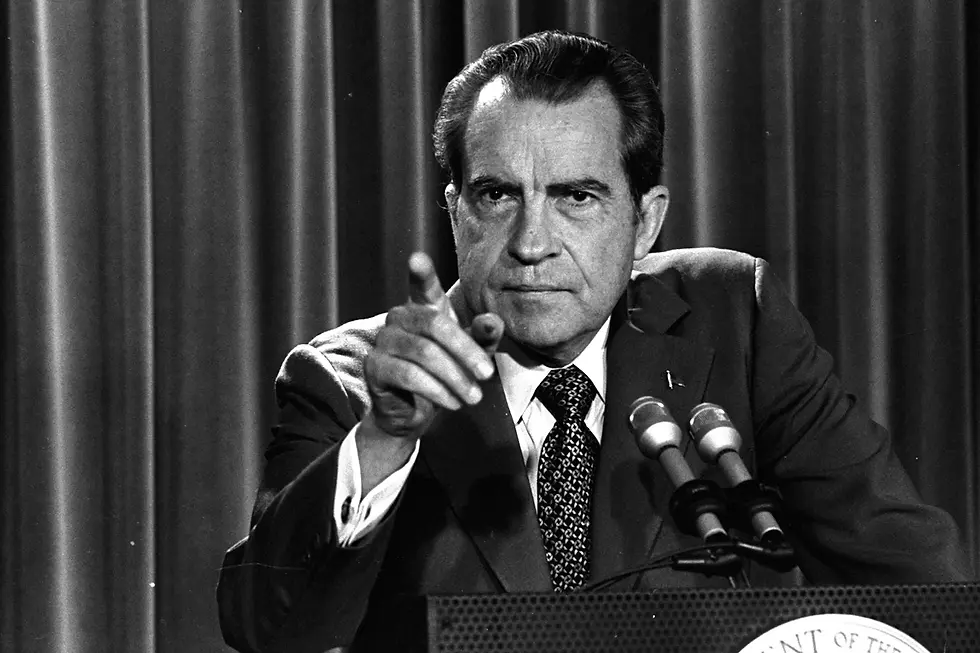
On August 9, 1974, the President of the United States resigned from office for the first and only time in American history. That president was Richard Nixon. His downfall was not caused by losing an election or a foreign war, but by a political scandal that exposed corruption, abuse of power, and an attempt to cover up the truth. The Watergate scandal reshaped American politics, transformed investigative journalism, and permanently changed the relationship between the public and the presidency.
What Was Watergate?
The Watergate scandal began with what appeared to be a simple burglary. During the early hours of June 17, 1972, five men were arrested after breaking into the headquarters of the Democratic National Committee, located inside the Watergate office complex in Washington, D.C. The burglars were attempting to install listening devices and photograph confidential campaign documents ahead of the 1972 presidential election. At first, the incident seemed like an isolated crime. However, investigators soon discovered that the burglars had connections to President Richard Nixon's re-election campaign, officially known as the Committee to Re-elect the President, or CREEP. What initially looked like political espionage quickly evolved into one of the largest political scandals in American history.
The Cover-Up
Ironically, the burglary itself was not what ended Nixon's presidency. It was the effort to hide the administration's involvement. Senior officials inside the White House worked to obstruct the investigation. They encouraged witnesses to lie, destroyed evidence, paid hush money to the burglars, and attempted to use government agencies such as the FBI and CIA to interfere with the investigation. Richard Nixon denied any involvement and repeatedly assured the American public that the White House had done nothing wrong. However, behind the scenes, evidence was mounting that the administration was actively trying to prevent investigators from uncovering the truth.
The Journalists Who Refused to Let the Story Die
The Watergate story may never have reached the public without the work of investigative journalists Bob Woodward and Carl Bernstein of The Washington Post. While many initially dismissed the burglary as a minor political incident, Woodward and Bernstein continued digging. They interviewed confidential sources, followed financial records, and connected members of the Nixon administration to the break-in and subsequent cover-up. One of their most important sources was an anonymous informant known only as "Deep Throat," whose identity remained secret for more than 30 years before being revealed in 2005 as former FBI official Mark Felt. Their reporting demonstrated the power of investigative journalism and showed that persistent reporting could hold even the most powerful leaders accountable.
The Secret White House Tapes
One of the biggest turning points came when investigators discovered that Nixon had installed a secret recording system inside the White House. Nearly every important conversation in the Oval Office had been automatically recorded. Congress and the special prosecutor demanded access to these tapes because they could reveal whether Nixon had participated in the cover-up. Nixon refused to hand them over, claiming executive privilege, which protects certain presidential communications from public disclosure. The dispute eventually reached the Supreme Court. In July 1974, the Court unanimously ruled that Nixon had to surrender the tapes. When the recordings became public, they revealed what became known as the "smoking gun." One conversation showed Nixon discussing plans to use the CIA to block the FBI's investigation just days after the burglary. The tapes confirmed that the president had participated in obstructing justice.
Nixon Resigns
Following the release of the tapes, support for Nixon collapsed. Members of his own Republican Party informed him that impeachment and removal from office were now inevitable.
Rather than face almost certain impeachment by the House of Representatives and conviction in the Senate, Nixon announced his resignation on August 8, 1974, leaving office the following day.
Vice President Gerald Ford became president and, only weeks later, granted Nixon a full presidential pardon for any federal crimes he may have committed while in office. The decision remains one of the most controversial presidential actions in modern American history.
Why Watergate Still Matters
The Watergate scandal had consequences that extended far beyond Richard Nixon.
It led to stronger oversight of campaign financing, increased transparency within government, and reforms designed to limit abuses of presidential power. Public trust in government declined sharply, and Americans became more skeptical of political leaders and official statements. The scandal also reinforced the importance of an independent press, an impartial judiciary, and congressional oversight. Watergate demonstrated that no individual, including the president, is above the law. Even today, the suffix "-gate" is attached to countless political controversies around the world, a reminder of the scandal that permanently entered the political vocabulary.
Lessons from Watergate
More than fifty years later, Watergate remains one of the clearest examples of why democratic institutions matter. The scandal was uncovered not by a single person, but through the combined efforts of journalists, investigators, judges, members of Congress, and whistleblowers who refused to ignore the evidence. Ultimately, Watergate was not simply about a break-in. It was about what happens when those in power attempt to place themselves above accountability. The scandal serves as a lasting reminder that democracy depends not only on elections, but on transparency, checks and balances, and the willingness of institutions to defend the rule of law, even against the country's most powerful officials.


Comments