In just over eight years, the United Kingdom has gone through an extraordinary number of prime ministers. Some occupied Number 10 Downing Street for years. Others barely lasted long enough to unpack their belongings. This raises an obvious question: why does the UK keep losing prime ministers? The answer lies in Britain's political system itself — a system designed to remove leaders quickly when they lose support.
Britain Doesn't Actually Elect Prime Ministers
One of the biggest misconceptions about British politics is that voters directly elect the prime minister. They do not. Instead, British citizens vote for Members of Parliament in their local constituencies. The political party that wins a majority of seats in Parliament then selects its leader to become prime minister. This creates an important difference between Britain and presidential systems such as that of the United States. A British prime minister does not have a fixed term in office. Their position depends entirely on maintaining the confidence of Parliament and, crucially, the support of their own party. The moment that support disappears, their premiership can collapse remarkably quickly. In Britain, political survival is often less about winning elections and more about keeping your colleagues on side.
The Brexit Domino Effect
The modern era of rapid leadership turnover began with one political earthquake: Brexit.
In 2016, Prime Minister David Cameron called a referendum on whether the United Kingdom should remain a member of the European Union. Cameron believed that voters would choose to remain and hoped the referendum would settle divisions within his party once and for all. Instead, Britain voted to leave. Having campaigned for the losing side, Cameron concluded that he could not lead the country through a Brexit process he fundamentally disagreed with. By the following morning, he had announced his resignation. One referendum had already claimed its first prime minister. His successor, Theresa May, inherited the enormous challenge of delivering Brexit. However, Brexit proved politically toxic. It divided Parliament, divided the public, and divided her own Conservative Party. May negotiated a withdrawal agreement with the European Union, but Parliament rejected it three separate times. Members of her own party increasingly questioned her leadership and her ability to deliver Brexit. Eventually, she accepted defeat and resigned in 2019. Brexit had now claimed its second prime minister.
Scandal and Economic Chaos
Next came Boris Johnson. Johnson succeeded where May had failed and formally completed Britain's departure from the European Union. Following a landslide election victory in 2019, he appeared politically invincible. But scandals gradually eroded his authority. The most damaging was Partygate — revelations that gatherings had taken place in government buildings while strict COVID-19 restrictions applied to the rest of the country. Public anger grew rapidly, and ministers began resigning from government positions. Soon, dozens more followed. Eventually, Johnson lost the confidence of his own party and government, forcing him to resign in 2022. His successor would fare even worse. Liz Truss entered office promising economic growth and bold reforms. Her government announced sweeping tax cuts but failed to explain how they would be funded. Financial markets reacted immediately. The value of the pound fell sharply. Government borrowing costs increased, and investor confidence collapsed. Within weeks, her own party had turned against her leadership. After just 45 days in office, Truss resigned, becoming the shortest-serving prime minister in British history.
The Voters Have Their Say
After years of turmoil, Rishi Sunak entered office promising stability. His government succeeded in calming financial markets and restoring a degree of confidence after the chaos of the Truss premiership. However, Sunak faced enormous political challenges, including rising living costs, strained public services, and growing voter fatigue after fourteen years of Conservative government.
In the 2024 general election, voters delivered a crushing defeat to the Conservatives. Sunak left office not because of scandal or rebellion, but because the electorate simply wanted change.
The pattern of rapid turnover continued under Labour.
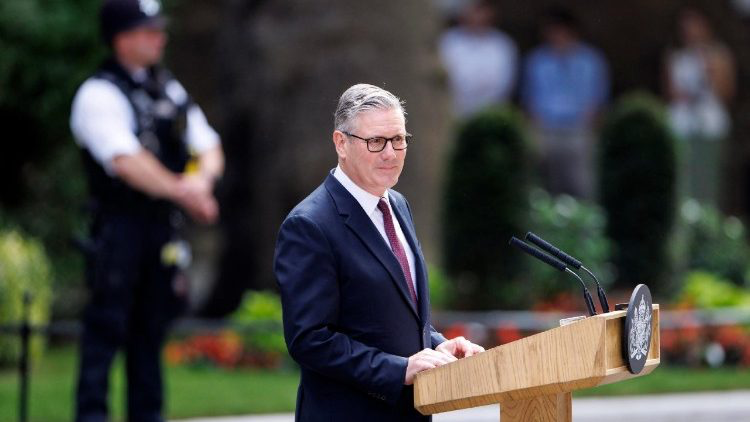
Prime Minister Keir Starmer announced his resignation as both prime minister and leader of the Labour Party on 22 June 2026 after months of declining public support, disappointing local election results, and increasing pressure from within his own party to step aside before the next general election. He remained in office as caretaker prime minister while the Labour Party began the process of selecting a successor, with Andy Burnham widely viewed as the leading contender. For many observers, it represented yet another chapter in Britain's remarkable period of political instability in the post-Brexit era.
Why Britain Keeps Losing Prime Ministers
So why does the United Kingdom keep losing prime ministers? Because in Britain, political power is never truly secure. A British prime minister is not elected for a guaranteed term in the way that presidents often are. Instead, they govern only for as long as they can maintain the support of Parliament, their party, and ultimately the public.In many ways, every British prime minister is auditioning for the job every single day they remain in office. And the moment the audience stops applauding, the curtain can fall very quickly indeed.

Comments